
Chhota Hathi vs Electric 3-Wheeler — Which Is Right for Your Business?
Chhota Hathi vs Electric 3-Wheeler — Which Is Right for Your Business?
Electric Loader vs Diesel Loader — Real Running Cost Comparison
Electric Loader vs Diesel Loader — Real Running Cost Comparison
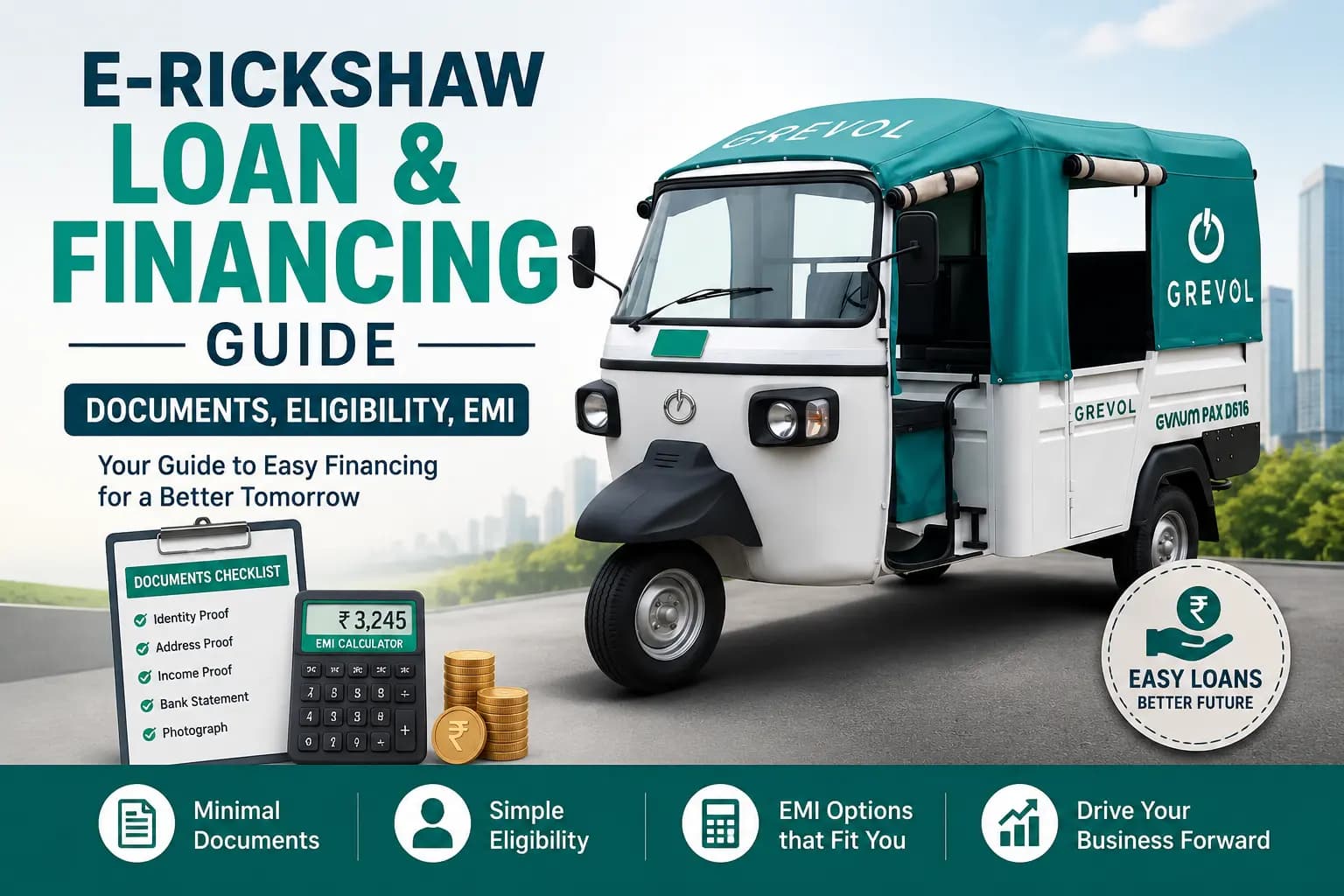
E-Rickshaw Loan: How to Finance Your Electric Vehicle
For many drivers and small business owners, the biggest challenge is not deciding whether an EV can make money.
It is arranging the initial investment.
An e rickshaw loan can spread the vehicle cost over manageable monthly payments, but borrowers should look beyond the advertised EMI.
The right financing decision depends on down payment, interest rate, loan tenure, processing fees and expected daily earnings.
How does an e-rickshaw loan work?
The basic structure is:
Vehicle price − down payment = financed amount
The lender then charges interest on the financed amount.
Your monthly payment depends on:
- Loan amount
- Interest rate
- Tenure
- Processing fees
- Insurance or bundled charges
- Credit profile
Example EMI calculation
Suppose the financed amount is:
₹1,50,000
and the loan is taken for:
36 months
The exact EMI depends on the interest rate.
The important point is to calculate the EMI before buying the vehicle rather than starting with the vehicle and trying to fit the EMI into your income afterward.
What documents may be required?
Common documents can include:
- Aadhaar
- PAN
- Address proof
- Bank statement
- Passport-size photographs
- Driving licence
- Vehicle quotation
- Proof of business/income where applicable
The actual requirements vary by lender.
What does the lender evaluate?
A lender may consider:
- Credit history
- Existing loans
- Income
- Banking activity
- Down payment
- Vehicle value
- Employment/business profile
- Repayment capacity
For owner-drivers, consistent bank transactions can help demonstrate cash flow.
Don’t choose a loan based only on EMI
Consider this example.
Loan A:
₹5,500/month
Loan B:
₹5,900/month
Loan B may initially look worse.
But what if Loan A has:
- Higher processing fee
- Longer tenure
- Higher total interest
The lower EMI may actually cost more.
Therefore compare:
Total amount repaid
not just:
Monthly EMI
How much EMI can your business support?
Use a simple rule.
Calculate your monthly vehicle income.
Then subtract:
- Charging/fuel
- Maintenance
- Insurance
- Permit-related expenses
- Parking
- Driver expenses
- EMI
The remaining amount is your effective operating surplus.
For example:
Monthly business revenue: ₹45,000
minus:
Operating costs: ₹20,000
minus:
EMI: ₹7,000
leaves:
₹18,000
This is only an illustration. Your actual numbers will depend on your route and utilization.
Why financing is becoming more important for EV adoption
A commercial vehicle is a productive asset.
If financing allows you to deploy the vehicle immediately and the vehicle generates more monthly cash flow than its operating and financing costs, credit can accelerate business growth.
But the opposite is also true.
An oversized EMI can create financial stress even when the vehicle itself is efficient.
Questions to ask before signing
Ask the lender:
- 1.What is the interest rate?
- 2.Is the rate fixed or variable?
- 3.What is the total processing fee?
- 4.What is the prepayment charge?
- 5.Is insurance mandatory?
- 6.What is the total repayment amount?
- 7.Is there any balloon payment?
- 8.What happens after an EMI is delayed?
- 9.Is battery replacement financed?
- 10.Is the loan tied to a specific dealer?
Financing vs cash purchase
Cash purchase may save interest.
Financing may preserve working capital.
For a small logistics business, keeping some money available for:
- Working capital
- Repairs
- Charging setup
- Insurance
- Business expansion
can sometimes be more valuable than paying the entire vehicle cost upfront.
Final takeaway
A good e-rickshaw loan should make the vehicle easier to operate, not harder to afford.
Before choosing a lender, calculate:
Down payment + total interest + fees + EMI + monthly operating cost
Then compare that number with your expected monthly income.
Explore Grevol financing options: /finance/
Recent Posts
Discover more articles here